Why Festival Schedules Need Empty Space
Festival schedules need empty space so you can respond to delays, shifting interests and fatigue without turning a missed set into a rushed day.
Festival schedules need empty space because a favourite set can run late, a new sound can draw you in, or your energy can change. The question is how to leave room for those choices without losing the performances you came to see.
Think of an open interval as permission to change your mind, not as a route-planning buffer. It can hold an unexpected conversation, an unplanned performance or a decision to leave early. That makes the timetable less like a list of obligations and more like a set of priorities.
Choose your anchors
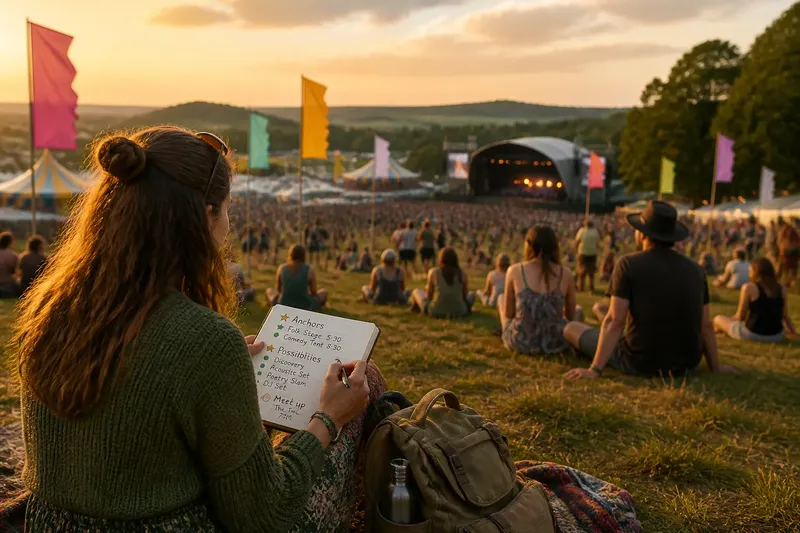
Start by naming the performances that would make the day feel worthwhile. Mark those as your anchors. Treat other acts as possibilities, rather than promises to yourself or your friends.
Next, decide what you want the open parts of the day to allow. You might want the freedom to follow an appealing set, sit somewhere quiet, or stay longer with a performance that surprises you. Naming the purpose of a gap helps you protect it from filling automatically.
Make room for choice
Not every open interval needs a task. If you reserve a stretch for discovery, leave its destination undecided. If you want time to recover, resist turning that pause into another commitment just because a nearby act appears on the programme.
Say you have marked two fictional sets: a folk performance you care about and a comedy show afterwards. Suppose the folk set begins late, and you are enjoying it. With an open interval between the sets, you can stay for the ending, then decide whether the comedy still appeals. If it does, go; if it no longer feels worth the rush, skip it and keep the afternoon unhurried. The result is a choice made in the moment, rather than a scramble to rescue the original plan.
Leave some room for shared decisions, too. If friends want different performances, agree on a rendezvous point and a time to reconnect. Between those moments, people can follow their own interests without treating a split as a failure of the group plan.
Keep priorities visible
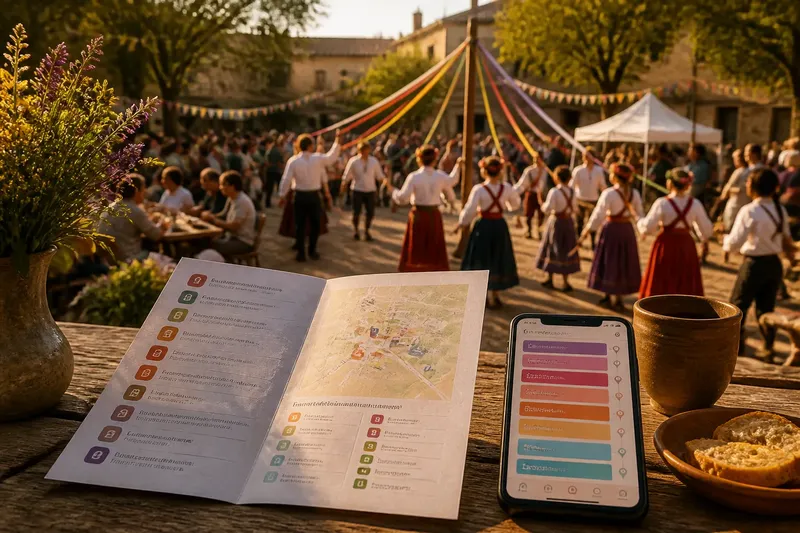
A note on your phone or a printed programme marked in pencil can distinguish anchors from optional ideas. Use a simple key, such as a star for an anchor and a dot for a possibility. Keep blank spaces visible. If every gap gets filled with another act, the timetable no longer gives you much freedom to respond.
Before the festival, make each choice with a clear decision attached:
- Check whether a performance is an anchor or an optional idea; if it is an anchor, keep it prominent, and if it is optional, be ready to drop it.
- Check whether an open interval is meant for discovery; if it is, leave its destination undecided, and if it is not, give it the purpose you actually need.
- Check whether a group has agreed where to reconnect; if it has, let people split up between meetings, and if it has not, agree on a rendezvous point before separating.
- Check whether you have left a stretch without a performance commitment; if you have, keep it open, and if you have not, remove an optional set.
- Check whether a proposed addition feels appealing rather than dutiful; if it does, mark it as optional, and if it does not, leave it off the timetable.
- Check whether your notes make anchors and possibilities easy to tell apart; if they do, use them as written, and if they do not, change the symbols or rewrite the note.
Questions about festival schedules?
How many sets should I plan to see?
Choose the performances that matter most to you first. Add optional sets only if you still have room to make choices without feeling obliged to attend everything you marked.
What should I do with an open interval?
Give it a loose purpose, such as discovering something new or deciding whether to stay where you are. It does not need a fixed activity to be useful.
How can friends keep plans flexible?
Agree on a clear place and time to reconnect, then let people make separate choices between those meetings. This avoids making every preference a group decision.
What if I change my mind about a set?
Keep the anchor performances distinct from optional ideas, so you can reconsider the latter without feeling that the whole timetable has failed. If an anchor no longer suits you, decide what you would rather do instead and let the rest of the plan stand or shift as needed.
Let the plan breathe
During the festival, check your notes when you need them, then pay attention to what is happening around you. You may stay because a set is better than expected, leave because it no longer suits you, or choose an unplanned performance. Those choices are the reason to leave space in the first place.
A flexible festival schedule does not require you to give up structure. Keep the performances that matter visible, make optional plans easy to drop, and leave at least one stretch genuinely undecided. That final blank space can give you the freedom to notice what you want next.