Open Grounds or Compact Venue: Which Festival Suits Your Day?
Compare open-ground and compact-venue festivals to choose the setting that suits your appetite for landscape, shared spaces and a more expansive or concentrated festival mood.
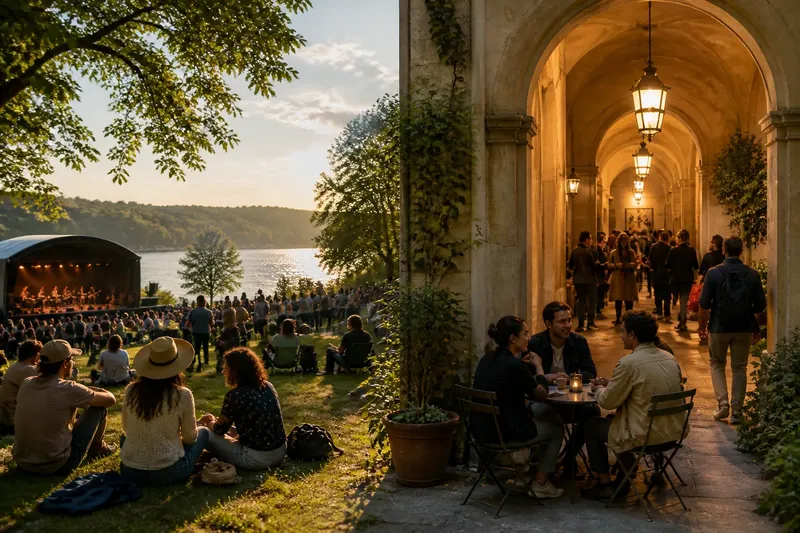
Are open-ground or compact-venue festivals a better fit for the kind of atmosphere you want? An open site can make the surroundings part of the event, while a compact venue gathers people and performances into a closer social orbit. The difference is less about crossing a site than about where you want your attention to settle.
At an open-ground festival, the changing light, weather and landscape can shape how a performance feels. In a compact venue, a courtyard, hall or cluster of rooms may give the event a more intimate character. Neither format is inherently livelier or calmer; the useful question is which setting feels inviting to you.
Outdoor atmosphere
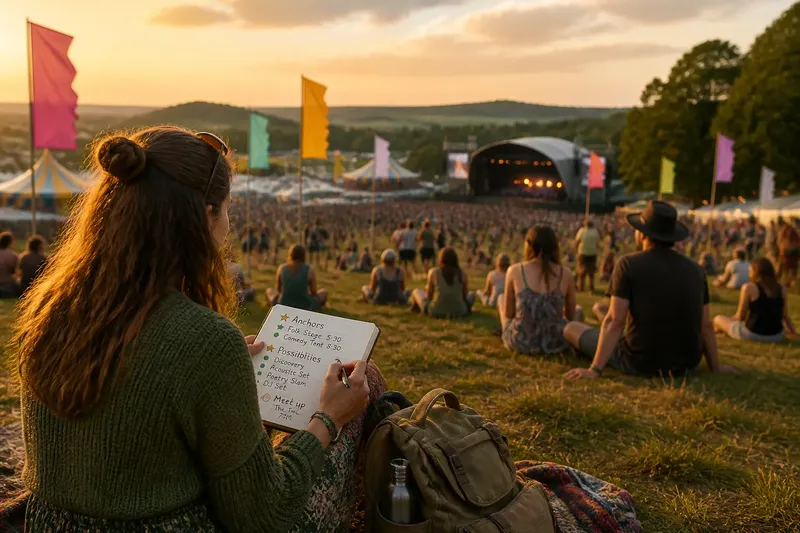
Open grounds can make a festival feel connected to its surroundings. A stage beside trees or on a waterfront has a different character from a room with a low ceiling, even when the programme is similar. You may find that the space itself gives the day a sense of occasion.
The setting also asks you to accept its conditions. Grass, gravel, wind and changing light are part of an outdoor event, not a decorative backdrop. Read the organiser’s access information and consider whether the available surfaces, seating and shelter suit your needs. If you rely on particular facilities, contact the organiser about the details rather than assuming the general description covers them.
Open space can feel generous, but it may also make a performance feel less enclosed. Sound, sightlines and the number of people around you can vary from one stage to another. Look for the festival’s descriptions of its performance spaces, and consider whether you prefer a broad outdoor setting or a more contained audience.
Close-knit venues
A compact festival can create a sense of shared occasion. People may gather in the same courtyard or pass through a common entrance, making the event feel centred on a small set of familiar spaces. That closeness can be appealing if you like the feeling of being among other attendees rather than spread across a landscape.
Shared spaces have their own character. A busy foyer or narrow courtyard can feel lively to one person and crowded to another. Check whether the venue offers quieter areas, seating or separate spaces for breaks. Venue descriptions, access notes and photographs can help you picture the atmosphere, though they cannot tell you exactly how a particular moment will feel.
Compact does not always mean intimate. A large hall can hold a substantial audience, while a small room may feel especially close. Look at the descriptions of the actual performance spaces rather than relying on the festival’s overall label.
Mixed-site character
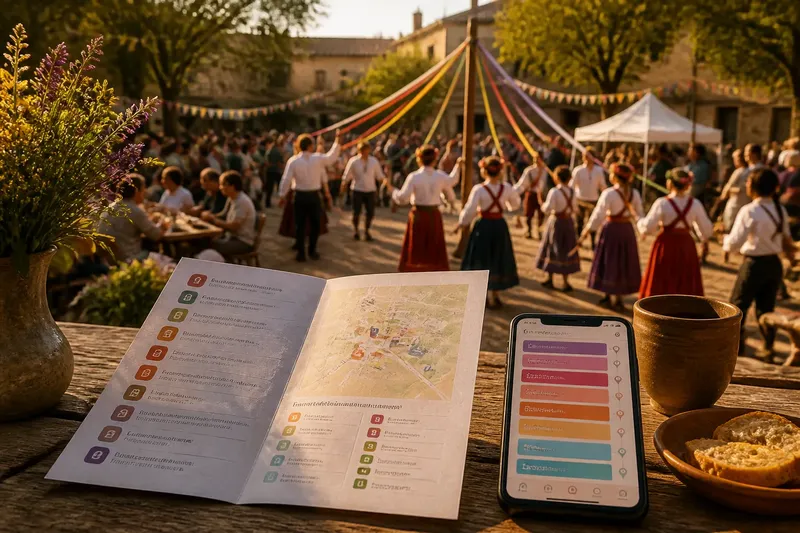
Some events combine a central venue with performances in a park, public square or partner building. That variety can give the festival several moods: a familiar place to gather, alongside settings that feel distinct from one another.
Consider whether you are drawn to the contrast itself. A performance in a civic hall may feel formal, while an outdoor stage can make the same programme seem more relaxed. For a mixed site, read the venue descriptions and access notes for each location. The experience may differ from one part of the festival to another.
Say you are choosing between a festival in a town hall and one spread across a riverside park. If the hypothetical preference you bring is a sheltered setting where conversation and shared indoor space are part of the appeal, the town hall is the clearer match. If your stated preference is open air and changing scenery, the park is more aligned, while weather exposure remains a trade-off. The choice follows from those preferences, not from a claim that either festival will feel the same to everyone.
Questions about atmosphere?
Is an open-ground festival always more relaxed?
No. An outdoor setting may feel spacious, but crowd density and the character of each performance area can change the mood. Check the venue descriptions and consider what kinds of surroundings help you settle in.
Will a compact venue feel intimate?
Not necessarily. Intimacy depends on the room, audience and event, not just the site’s footprint. Look for details about the individual spaces rather than relying on the word “compact”.
How can I tell if a venue suits my access needs?
Read the organiser’s access information for surfaces, seating, entrances and facilities that matter to you. If anything is unclear, ask the organiser directly or consult a qualified access professional where your circumstances require specialist advice.
What makes a mixed site appealing?
It can offer distinct settings and a change of atmosphere across the festival. It suits you best if that variety is part of the appeal, rather than an obligation to visit every kind of venue.
Match the setting
Use this short comparison to make the choice more concrete. For each observation, follow the decision that best reflects your preference; if the first option does not fit, use the alternative.
- Observation: the festival describes grass or gravel stages. If uneven outdoor surfaces suit your needs, keep the open-ground option in consideration; otherwise, ask about accessible surfaces or favour a venue with confirmed suitable access.
- Observation: the event page describes a shared foyer or courtyard. If a common gathering space appeals to you, consider the compact venue; otherwise, look for a festival with separate or quieter areas.
- Observation: the programme names different settings, such as a hall and a park. If changes of atmosphere sound appealing, consider the mixed site; otherwise, choose a festival centred on one kind of venue.
- Observation: the organiser lists outdoor shelter or seating. If the stated provision meets your needs, the open site remains an option; otherwise, ask for clarification or choose a more sheltered setting.
- Observation: venue descriptions identify a large hall rather than small rooms. If a broad audience space suits you, keep the compact venue in consideration; otherwise, seek details of smaller rooms or another event.
- Observation: access notes leave a facility or entrance unclear. If the organiser confirms the detail you need, decide on that information; otherwise, do not assume it is available and consider a venue with clearer arrangements.
Choose your setting
Choose open grounds if landscape and outdoor conditions are part of the attraction. Choose a compact venue if you prefer a shared set of indoor or closely grouped spaces. A mixed site may suit you if distinct surroundings are an important part of the festival’s appeal.
For open-ground or compact-venue festivals, the most useful comparison is not a general claim about which format is better. It is the specific setting, its facilities and the kind of atmosphere you want to spend time in. Read the organiser’s venue descriptions, and ask about any practical detail that could change your decision.