A First Look Around Before the First Set
A first look around before the first set helps you read the entrance, find practical help and choose a calm first stop without touring the whole site.
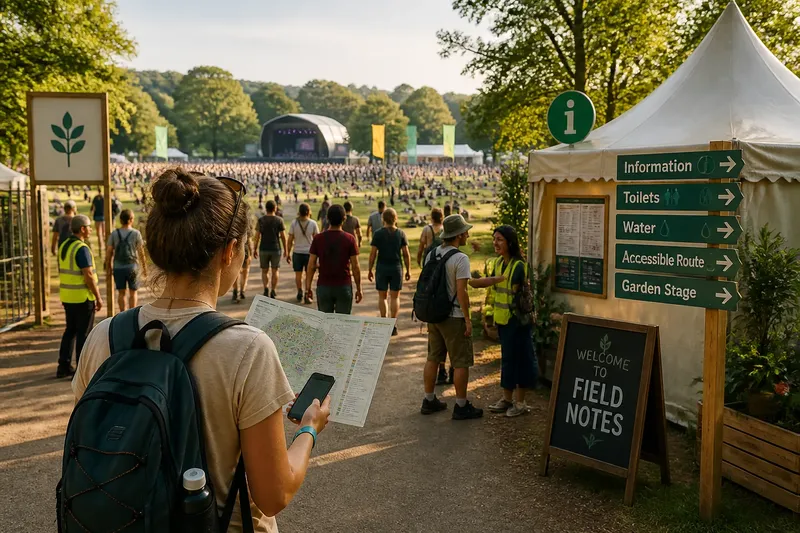
Where should you go first when you arrive at a festival site? A first look around before the first set is less about learning every path than understanding the arrival area: where the flow goes, where you can pause, and who can answer a question.
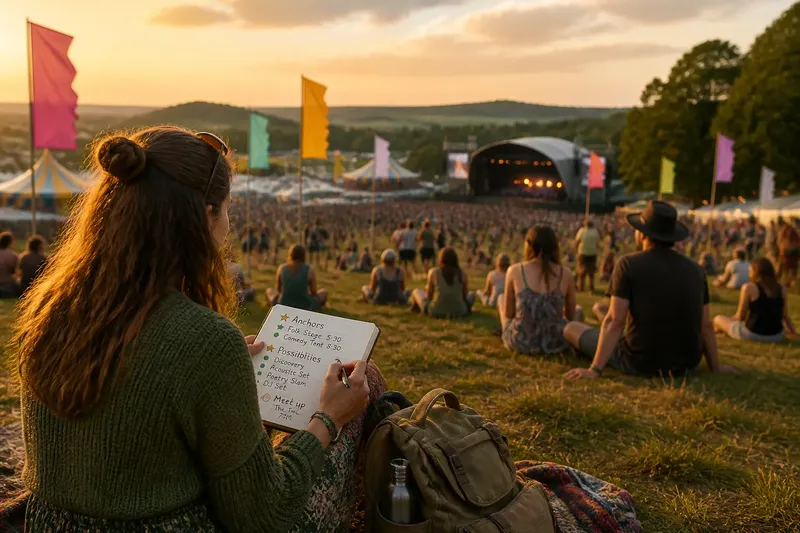
Imagine you arrive alone at a fictional one-day festival called Field Notes, held in a public park. The entrance opens onto a busy path, and you have a paper programme and a phone. Rather than setting off immediately, you take a moment to work out how to leave the gate area safely and get a clear answer if something is uncertain.
Finding breathing room
Once you have passed ticket checks, keep moving until you reach a wider space where stopping will not block people. Look for a bench, an open edge beside the path or a marked information area. Avoid pausing in a queue, at a gate or where people are turning into a narrow route.
At Field Notes, the visitor walks past the entrance pinch point before taking out the programme. From there, they can see people moving towards the lawn and can hear an information announcement. This first observation is useful because it distinguishes a place to pause from a route that needs to stay clear.
If the entrance is crowded or staff are directing people onward, follow their instructions and wait until there is room. If you need assistance straight away, tell a steward what you need rather than trying to read signs while moving.
Understanding the arrival area
Before choosing a destination, look for the practical signs that shape your first few minutes: an information point, accessible route signage, toilets, water points, or a noticeboard with current updates. You do not need to visit each one. The aim is to know where to ask or check if a question comes up.
Use the venue’s own names. If a board says “Information” or a sign identifies an accessible entrance, those labels are clearer to repeat than descriptions such as “the blue tent” or “the place by the trees”. If a sign is obscured or a route is unclear, ask staff to confirm rather than infer from the layout.
Keep the entrance in mind as a reference, but do not assume that the way in is also the way out or that re-entry works the same way. Check the posted instructions or ask a steward. Festival arrangements differ, and the signs on site are more reliable than expectations from another event.
Choosing a first destination
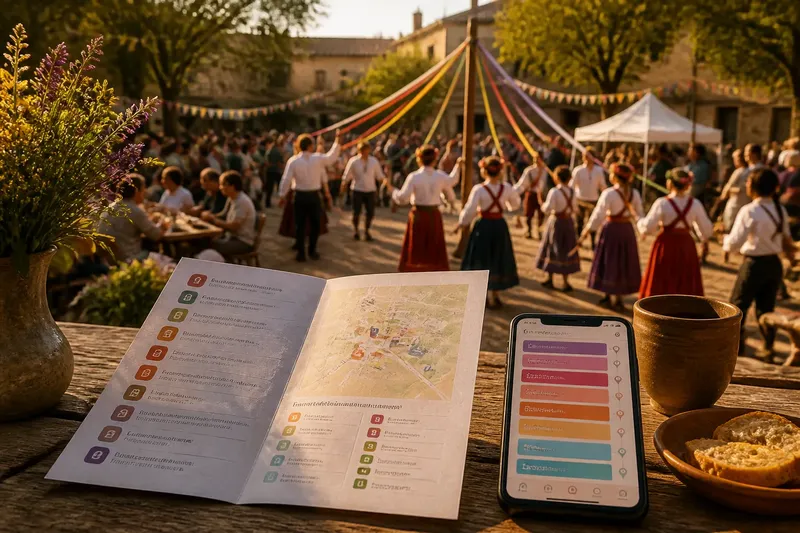
Now check the programme for one performance you genuinely want to hear. Use the current noticeboard, official app or other source identified by the organisers if a printed schedule may be out of date. The first destination can be a stage, an information point or another place that answers a practical question; it need not be a tour of the grounds.
At Field Notes, the visitor sees that a performance is due at the Garden Stage and asks an information steward which path leads there from the arrival area. The steward points to the signed route. The visitor decides to follow it, while keeping the information point as a fallback if the signs become unclear.
This is a small, reversible decision. If the path is crowded, a sign contradicts the programme, or the performance has moved, stop in a clear place and check the live notice again. Do not keep walking simply because the original plan sounded certain.
Useful arrival checks
Make each check lead to a decision, rather than turning the first pause into a catalogue of facilities.
- Check whether people are funnelled through a narrow entrance; if they are, keep walking to a clear area, otherwise pause where you will not obstruct the route.
- Check for an information point or staffed desk; if it is visible, note its official name, otherwise ask a steward where to get help.
- Check whether the programme has a current-update notice; if it names an official live source, use that, otherwise ask staff which notice to trust.
- Check whether the exit and re-entry instructions are posted; if they are clear, follow them, otherwise ask before leaving the event area.
- Check whether accessible-route signs match the route you need; if they do, follow the marked way, otherwise explain your destination to staff and ask for the appropriate route.
- Check whether the first performance is still listed at the expected stage; if it is, choose whether to head there, otherwise use the updated programme or ask about a nearby alternative.
When arrival plans change?
What if the entrance area is too busy?
Keep moving with the crowd until you reach a wider, clearly open place. If staff are directing visitors, follow their instructions and ask where you can safely stop.
Where should you ask for directions?
Look for a staffed information point or ask a steward, and use the official name of your destination. If you are unsure where you are, describe the nearest sign or entrance marker rather than guessing at a stage name.
What if the printed programme conflicts with a sign?
Pause somewhere out of the flow and check the festival’s designated live source, such as its official app or current noticeboard. If the information still conflicts, ask staff before choosing a route.
Should you explore the site first?
Only if you have a specific question that exploration can answer and enough time to do it without missing your chosen performance. Otherwise, make one practical first move and learn the site as you go.
A worked arrival
Imagine the Field Notes visitor has three pieces of information: the entrance path is narrow, the information point is signed beyond it, and the paper programme lists a desired set at the Garden Stage. The visitor first continues past the narrow section instead of stopping. At the information point, they ask whether the set is still there; staff confirm that it is and indicate the signed path. The visitor follows that route. The result is a clear first destination and a known place to return to for help, without needing to tour the park or memorise its map.
If the answer had been that the set was moved, the decision would change: the visitor would check the current programme and choose a revised destination before walking on. The useful part of the arrival routine is not a fixed route. It is the habit of getting one reliable answer at a time, from the signs or people responsible for the site.
That is enough for a first look around before the first set: find space to pause, identify where practical help is available, and choose a destination based on current information. As the crowd thickens or landmarks disappear behind people, return to a sign or steward and orient yourself again before moving.